
Indianapolis Roofers Guide
What's the Best Roof for Indiana's Wild Weather?
Published May 28, 2026
Indianapolis sits squarely in the Midwest’s 4-season zone: winters with snow, ice, and dozens of freeze-thaw cycles; springs with severe thunderstorms and hail; hot humid summers; and colorful but variable falls. Your roof has to handle all of it. Here’s a practical comparison of the main options.
Asphalt shingles
Best for: most Indianapolis homeowners seeking a balance of cost and performance
Expected lifespan in Indiana: 18–24 years (architectural); 14–18 years (3-tab)
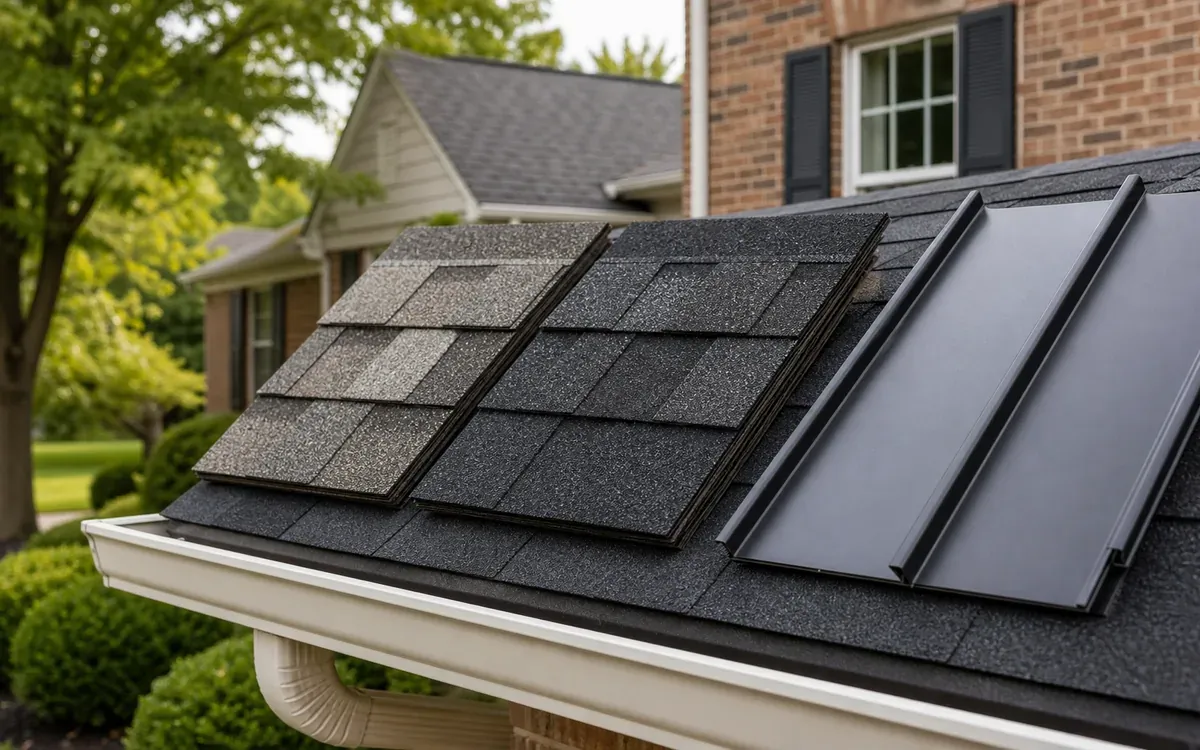
Asphalt shingles dominate the Indianapolis market for good reason — they’re cost-effective, widely available, and work reasonably well in the Indiana climate. But Indiana’s freeze-thaw cycles and spring hail season do shorten their effective lifespan compared to milder climates.
Standard 3-tab shingles are the budget option but have mostly been displaced by architectural shingles, which are thicker, more durable, and carry better wind and impact ratings.
Architectural (dimensional) shingles are the most common choice for Indianapolis homes — a meaningfully better product than 3-tab for a modest cost increase.
Impact-resistant shingles (Class 3 or 4) are worth serious consideration in Central Indiana. The Midwest spring severe weather season brings hail regularly, and Class 4 shingles are significantly more resistant to hail damage than standard asphalt. Many Indiana homeowners insurance providers offer discounts for Class 4 roofing — ask your insurer before choosing your shingle.
Algae-resistant shingles have copper or zinc granules that prevent the dark streaking from algae growth. In Indiana’s humid climate, especially on north-facing or shaded slopes, this is a worthwhile upgrade.
Metal roofing
Best for: homeowners prioritizing longevity and long-term value
Expected lifespan in Indiana: 40–60+ years (standing seam)
Metal is the strongest performer in the Indiana climate on a per-year basis:
- Freeze-thaw resistant — metal doesn’t absorb water, so it’s not affected by freeze-thaw cycling the way asphalt is
- Snow shedding — metal roofs shed snow more readily than shingles, which reduces ice dam risk (though proper attic insulation is still the primary defense)
- Hail resistant — most standing seam metal carries Class 4 impact ratings
- Wind resistant — standing seam panels with concealed fasteners hold up well in Indiana’s spring windstorms
The main objection is upfront cost — standing seam runs roughly 60–80% more than architectural shingles on the same roof. But over a 40-year horizon, one metal roof versus two asphalt replacements changes the comparison significantly.
Flat and low-slope roofing
Best for: commercial buildings, additions, and homes with flat sections
Expected lifespan in Indiana: 15–22 years (TPO or EPDM)
Single-ply membrane roofing (TPO, EPDM) is the standard for commercial and low-slope residential applications in Indianapolis. For Indiana specifically:
- EPDM (rubber membrane) handles temperature extremes well and has a long track record in Midwest climates, but black EPDM absorbs heat in summer
- TPO is the most popular modern single-ply for Indiana commercial roofs — white reflective surface handles summer heat well, seams are heat-welded for strong waterproofing
- Drainage design matters — flat roofs need properly sized and maintained drains and scuppers. Spring rain events in Central Indiana can be intense and quick; standing water is the primary enemy of membrane roof longevity
Putting it together
| Material | Indiana lifespan | Hail resistance | Cold performance | Cost (installed/sq ft) |
|---|---|---|---|---|
| 3-tab asphalt | 14–18 yrs | Moderate | Fair | $4.00–$6.50 |
| Architectural shingles | 18–24 yrs | Moderate–Good | Fair–Good | $5.50–$9.00 |
| Impact-resistant shingles | 20–28 yrs | Excellent | Good | $7.00–$11.50 |
| Standing seam metal | 40–60+ yrs | Excellent | Excellent | $9.00–$16.00 |
| Flat membrane (TPO/EPDM) | 15–22 yrs | Moderate | Good | $5.50–$10.00 |
The right choice depends on your budget, how long you plan to stay in the house, and your tolerance for the repair cycle that comes with standard asphalt. Call (463) 232-7399 for a free consultation on what makes sense for your specific home.