
Indianapolis Roofers Guide
What to Do After a Spring Hailstorm Damages Your Roof
Published May 10, 2026
Central Indiana sits in a region that sees significant severe weather every spring. Supercell thunderstorms can produce large hail, straight-line winds exceeding 80 mph, and occasional tornadoes — any of which can damage or destroy a roof. Here’s what you need to know about recognizing damage, documenting it properly, and working through the insurance process.
Indiana’s spring storm season at a glance
The main severe weather window runs from roughly March through June, when warm Gulf air collides with cold Polar air masses over the central states. Indianapolis sits in a corridor that gets impacted several times most springs by significant hail-producing storms.
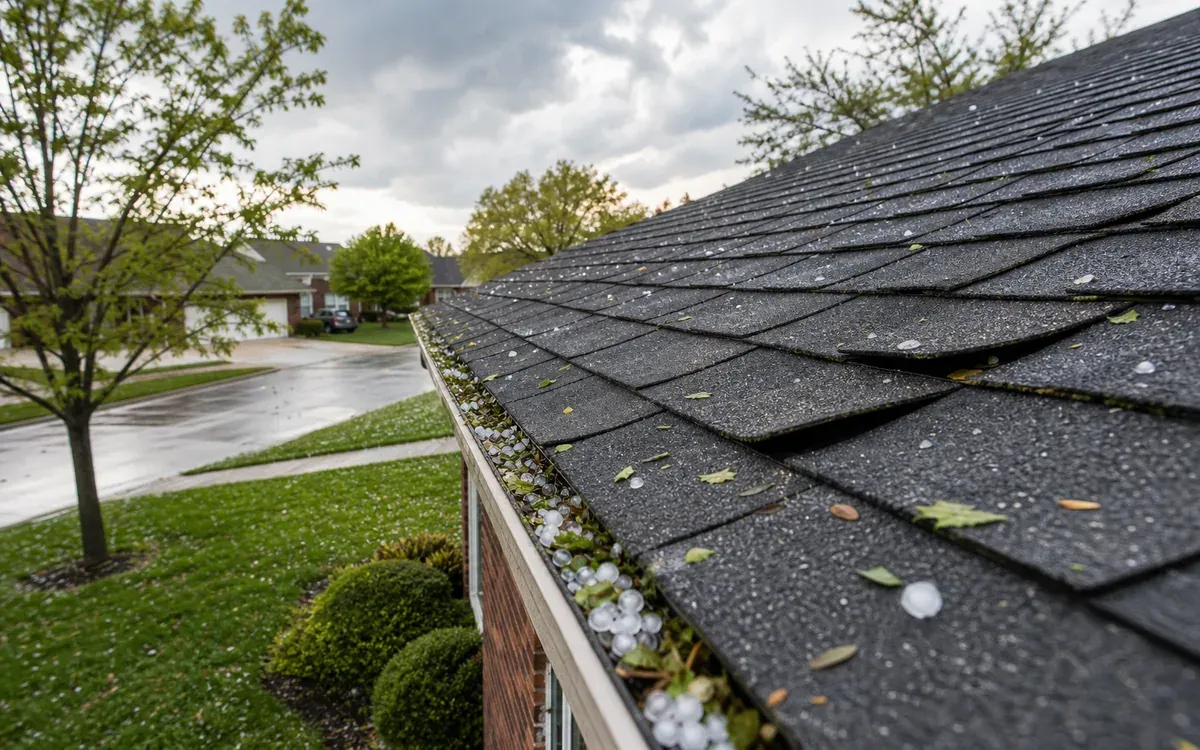
What makes Indiana’s storm damage particularly tricky is that hail damage isn’t always immediately obvious. You may not see a leak for months — but the granule loss and shingle bruising from a hail event leaves the roof vulnerable to UV degradation and shortened lifespan well before it starts leaking. This is why getting an inspection after any significant storm event is worthwhile even when things look fine from the ground.
What hail damage looks like
On asphalt shingles:
- Soft spots or “bruises” — circular depressions in the shingle surface where the mat underneath has been damaged
- Granule loss — areas where granules have been knocked off, leaving exposed asphalt
- Shiny or bare patches scattered across the field of the shingle (as opposed to normal edge wear)
On gutters and metal components:
- Dents or dings on gutters, downspouts, flashing, and HVAC units are strong visual indicators of hail size — if these are dented, the shingles were hit hard too
Inside your home:
- Active leaks are a late-stage symptom — by the time you see water, the damage has been progressing
What wind damage looks like
Indiana spring storms regularly produce damaging straight-line winds. Wind damage is typically more immediately visible than hail:
- Missing or displaced shingles, especially at ridges, hips, and roof edges
- Lifted shingle edges where wind got underneath the adhesive strip
- Damaged or blown-off ridge caps
Even small wind damage — a few lifted shingles — is worth addressing promptly. An exposed nail hole or unsealed shingle edge can admit significant water during the next storm.
Documenting damage for an insurance claim
If you suspect significant damage after a storm:
- Note the date and time. Weather service data and neighboring claims corroborate the storm event.
- Take photos from the ground — dented gutters, granule accumulation in downspouts, any missing shingles visible from below.
- Check whether neighbors were affected. Widespread neighborhood damage is strong evidence for a storm-caused claim.
- Contact your insurer to report the potential claim and ask about the inspection process and your deductible before authorizing any repairs.
- Get a roofer’s inspection and documentation — a professional can access and document the roof surface damage with photos that the adjuster will need.
We’re familiar with what adjusters look for on hail and wind claims in the Indianapolis area and can help make sure legitimate damage is properly documented.
Working with your insurance adjuster
Having a roofer on-site when your adjuster visits is one of the most consistently useful things you can do. Adjusters are professionals but they see high volumes of claims. A roofer who knows the specific indicators of hail impact — and can point to them on your specific roof — helps ensure nothing legitimate is missed.
If an adjuster’s initial estimate seems low or misses obvious damage, you have the right to request a second review or engage a public adjuster.
After the claim
Once your insurer approves the claim and you select a contractor, the repair or replacement process is essentially the same as any roofing project — except the bulk of the cost is covered by your claim payment minus your deductible.
Call (463) 232-7399 after any significant storm. We’ll give you an honest assessment of the damage, help with documentation for a potential claim, and work through the repair or replacement process with you.