
Indianapolis Roofers Guide
How Indiana Winters Wear Down Your Roof
Published June 20, 2026
Indiana winters are real. Indianapolis averages over 23 inches of snow per year and sees dozens of freeze-thaw cycles each winter season. That combination — heavy snow, ice, and constant thermal cycling — is genuinely hard on roofing systems. Here’s what to know.
The four main winter threats
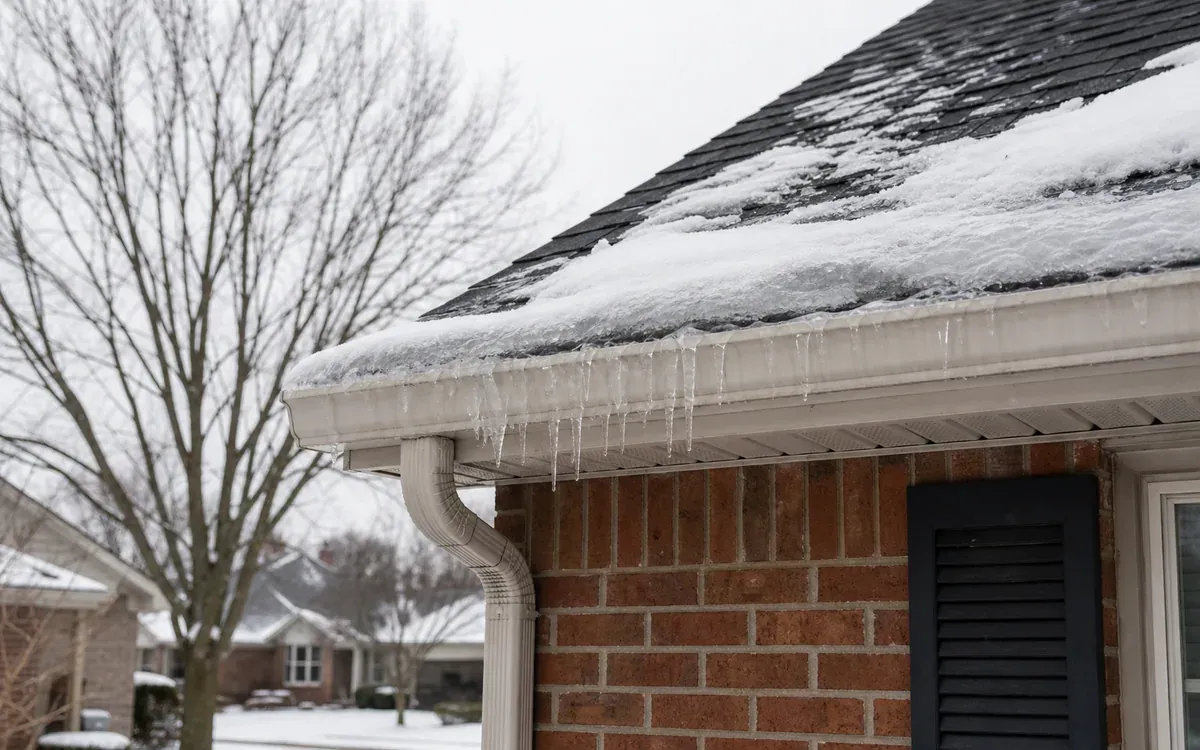
Ice dams
Ice dams are the most discussed winter roof problem in the Midwest, and for good reason. They form when:
- Heat escapes from the living space into the attic (poor insulation or air sealing)
- That heat warms the upper roof surface, melting snow
- Meltwater runs down to the cold eaves and refreezes
- The ice buildup creates a dam that traps additional meltwater
- Backed-up water finds gaps under shingles and can enter the home
The damage from ice dams — water stains, wet insulation, damaged drywall — often shows up in January and February and is frequently misattributed to a “roof leak.” The real problem is the heat loss from the living space.
The fix: Proper attic insulation and air sealing prevent ice dams from forming. Once a dam exists, a roofer can safely remove it. Never use a pickaxe or aggressive tools on a frozen roof — you’ll damage the shingles.
Freeze-thaw cycles
Indianapolis typically sees dozens of freeze-thaw cycles per winter — temperatures that drop below freezing at night and warm above it during the day. Every time water in a roofing gap freezes, it expands and widens that gap slightly. Over thousands of cycles across a roof’s lifespan, this mechanical stress degrades flashing seals, lifts shingle edges, and works on any weakness in the system.
This is one reason Indiana roofs often reach end of life faster than their rated lifespans suggest, and why annual maintenance is worth the cost.
Snow loading
Indiana roofs are generally engineered for regional snow loads, and typical Indianapolis snowfall rarely stresses a sound roof. However:
- Roofs with low slopes can accumulate more weight
- Very wet, heavy snow (common in early and late winter) is denser than light powder
- An older roof with compromised decking is more vulnerable
- Flat or low-slope commercial roofs are more susceptible to ponding water once snow melts
Wind and winter storms
Winter storms in Indiana frequently bring strong winds that can lift shingles — especially at ridges, hips, and edges. Lost or lifted shingles in winter create immediate vulnerability because the repair window is often short before the next storm.
Pre-winter maintenance checklist
Before the first significant cold snap, it’s worth checking:
- Gutters and downspouts — clear them of fall leaves so snowmelt drains properly rather than refreezing
- Flashing seals — around chimneys, vents, and at eave/wall junctions where ice dams most commonly damage
- Shingle condition — any loose, lifted, or missing shingles going into winter will be exposed to the worst conditions
- Attic insulation and ventilation — the primary defense against ice dams. If you’ve had dams before, this is worth addressing before next winter.
Signs of winter roof damage to watch for
- Water stains on interior ceilings in late January or February — often from backed-up ice dam water
- Dark streaks or wet patches in the attic during or after a thaw
- Missing or lifted shingles visible from the ground after a wind event
- Damaged gutters sagging or pulled away from the fascia from ice weight
When to call a roofer
- After any significant winter storm — especially if you can see displaced shingles
- If you see any water entry inside the home during a thaw
- Before winter — late fall is an ideal time to catch small issues before they’re exposed to the worst conditions
Call (463) 232-7399 for a pre-winter inspection or post-storm assessment. We’re local, we know Indiana winters, and we give you a straight answer about what you’re dealing with.