
Indianapolis Roofers Guide
Should You Repair Your Roof or Replace It?
Published June 8, 2026
Short answer: repair when the damage is contained and the roof has years of life left. Replace when damage is widespread, the roof is aging out, or you’re making the same repair call repeatedly. Indiana’s climate adds a few extra considerations — here’s how to read your specific situation.
Quick reference
| Situation | Repair | Replace |
|---|---|---|
| Single localized leak | ✓ | |
| Roof is under ~12 years old | ✓ | |
| Isolated storm damage on a sound roof | ✓ | |
| Two or more repairs in the last two years | ✓ | |
| Damage in multiple separate areas | ✓ | |
| Widespread granule loss across large sections | ✓ | |
| Roof is past 18–22 years old (asphalt) | ✓ | |
| Soft or rotted decking found underneath | ✓ | |
| Storm damage covering a large portion of the roof | Often |
When repair is the right call
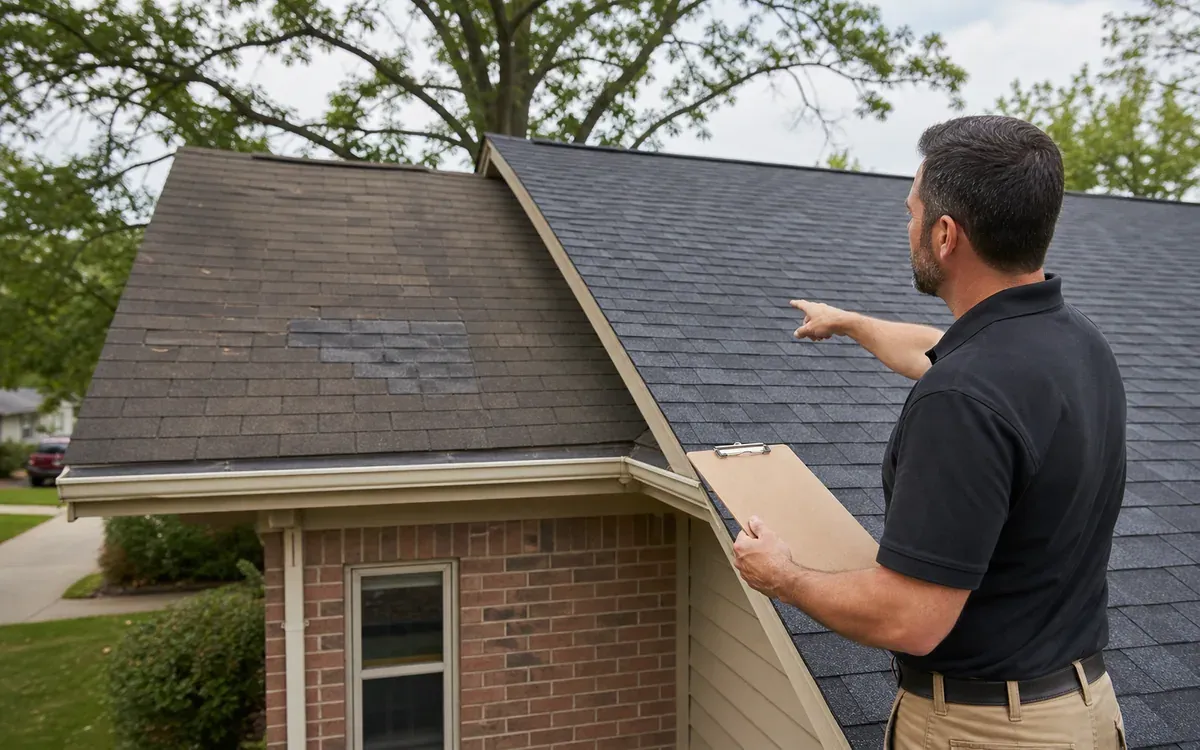
The problem is in one spot. A localized leak, a section of lifted shingles after a spring windstorm, or a failed flashing seal around a chimney — these are contained problems. Fix them and the rest of the roof keeps doing its job.
The roof is still relatively young. Architectural asphalt shingles in Indiana are good for roughly 20–25 years under typical conditions, though freeze-thaw cycles and spring hail often push that toward the lower end. A roof well inside that window is a repair candidate.
Insurance covers storm damage. If hail or wind from a Central Indiana storm caused the damage, your homeowners policy likely covers it. That changes the math significantly — a covered repair (or covered replacement) is a different calculation than an out-of-pocket one. See our spring storm season guide.
When replacement makes more sense
The same roof keeps needing attention. Once an asphalt shingle roof starts failing, it rarely fails in just one place. Two calls in two years in different areas is the roof telling you it’s done.
Widespread granule loss. Granule loss across large field areas — not just at downspouts — means the protective layer is gone broadly. You can often see bare or shiny patches across entire slopes. At that point, the roof is degrading uniformly rather than at one spot.
The roof is at or past its expected lifespan. A 20-year-old asphalt roof in Indianapolis has been through a lot of freeze-thaw cycles, spring hail seasons, and summer heat. Even if it “looks okay” from the ground, it may be failing from age uniformly. An on-site inspection will tell you honestly where it stands.
Moisture has gotten into the structure. If there’s soft or rotted decking under the shingles, that means water has been entering for a while. At that point the problem has moved beyond the roofing surface.
The cost comparison
A repair is cheaper upfront. The relevant comparison is whether you’re spending repair money on a roof that will need replacing in the next few years anyway. If your roof is 18+ years old and you’re facing your second or third repair, adding the cumulative repair cost to the replacement cost often makes replacement look like the smarter call.
See our Indianapolis roof replacement cost guide or use the cost calculator to get a quick range.
Get an honest assessment
The best answer to the repair-or-replace question is a free, on-site look from a roofer who will tell you the truth. Call (463) 232-7399 and we’ll give you a straight assessment with no pressure either way.